
 (612) 236-0055
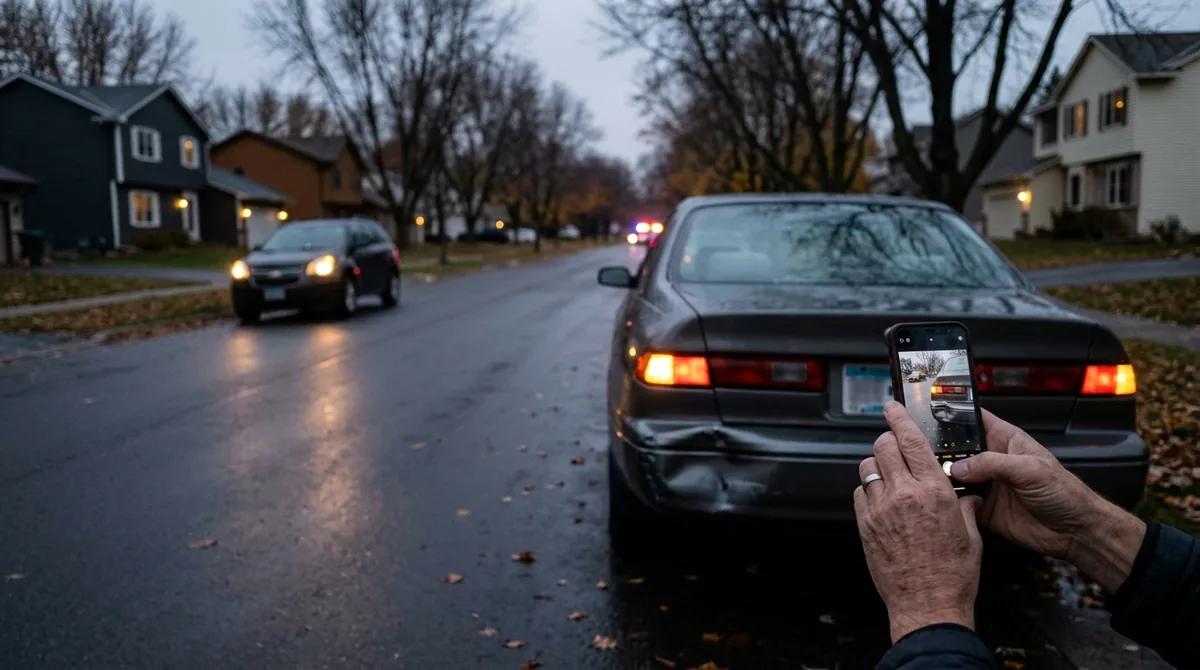
Right after a crash, it's hard to think clearly. You don't need to have everything figured out today. This guide walks through what matters most, in the order it matters.
Just had an accident? Start here.
- Check for injuries and call 911 if anyone is hurt.
- Move to a safe spot if you can do it safely.
- Exchange names, contact information, plates, and insurance.
- Take photos of the vehicles, the scene, and any injuries.
- Get names and phone numbers from any witnesses.
- See a doctor within a day or two, even if you feel okay.
- Report the crash to your own insurance company.
At the Scene
Right after a crash, most people are shaken up. That's normal. Focus on safety first, then on gathering information.
Check on everyone. If anyone is hurt, even slightly, call 911. Minnesota law requires drivers to report crashes that injure or kill someone, and a 911 call takes care of that. If no one is hurt, calling police is still a good idea. A police report creates an official record, and injuries sometimes don't show up until later.
Get somewhere safe. If the cars can be moved and no one is hurt, pull out of traffic and turn on your hazard lights. If you can't move the car and you're on a busy road, it's often safer to stay inside with your seatbelt on until help arrives.
Stay at the scene. Don't leave until you've exchanged information. Leaving the scene of a crash can be a crime in Minnesota, even when the damage looks minor.
Exchange information. Get the other driver's name and phone number, license plate number, insurance company and policy number, and driver's license (a photo of it works). Share the same information about yourself.
Stick to the facts. It's natural to want to apologize or talk through what happened. Try not to guess about who caused the crash. Fault is often more complicated than it looks in the moment, and what you say can be repeated later.
Key Takeaway
Safety first, then information. You can sort out fault later. Right now you only need names, plates, insurance, and photos.
Document What You Can
Evidence from the scene is easiest to collect in the first few minutes, and some of it disappears quickly. Use your phone to photograph:
- All vehicles, from several angles, including the plates
- The damage, both close up and from a distance
- The road, traffic signals, signs, and skid marks
- Weather and road conditions, including ice or snow
- Any visible injuries
- The other driver's insurance card and license
Talk to witnesses. If anyone stopped, ask for their name and phone number. Witnesses are hard to find later.
Write down what you remember. Once you're safe, jot a few notes: the time, the location, which direction each car was going, and what happened. A short note on your phone is enough. Memories fade faster than people expect.
Get the report number. If police respond, ask for the officer's name and the report number before you leave.
Get Medical Care, Even If You Feel Fine
This is the step people skip most often, and the one that matters most.
Adrenaline can hide pain for hours. Neck and back injuries, whiplash, and concussions often don't show symptoms until the next day or later. Feeling fine at the scene doesn't mean you weren't hurt.
- Get checked within a day or two Urgent care, the emergency room, or your own doctor all work.
- Tell them it was a car accident This connects your injuries to the crash in your medical records.
- Mention every symptom Headaches, dizziness, trouble sleeping, stiffness, numbness. Small symptoms can point to bigger problems.
- Follow through Go to the follow-up visits and physical therapy your doctor recommends.
Key Takeaway
Gaps in treatment are one of the first things insurance companies look for. If weeks pass between the crash and your first appointment, they may argue your injury came from something else.
Report the Crash to Your Insurance
Minnesota is a no-fault state. That means your own auto insurance pays your medical bills and some lost wages first, no matter who caused the crash.
Call your insurance company promptly, even if the accident wasn't your fault. Your no-fault benefits start with them. They'll give you a claim number and an application for benefits. Waiting can cause delays.
Expect a call from the other driver's insurance. You can be polite and brief. You don't have to give them a recorded statement, and you don't have to sign anything they send you.
The other driver's insurance company is there to protect their customer, not you.
Be careful with forms. Medical authorization forms from the other insurer are often much broader than they need to be. Read anything before you sign it, or have a lawyer look at it first.
Our guide to Minnesota no-fault insurance explains what your coverage pays, how much, and when you can bring a claim against the driver who caused the crash.
Keep Your Records Organized
A simple folder, paper or digital, makes everything that follows easier. Keep:
- The police report number and your insurance claim numbers
- Names and contact information for every adjuster you talk to
- Medical visit dates, bills, and receipts
- Prescription receipts
- Mileage to and from medical appointments
- Dates you missed work, and your pay stubs
- Repair estimates and rental car receipts
- Photos from the scene and of your injuries as they heal
Keep a short daily journal. A few sentences a day about your pain, your sleep, and what you couldn't do. Injuries affect life in ways medical bills don't capture: missing your kid's game, not being able to carry groceries, struggling to get through a workday. A journal is the best record of that, and it's hard to recreate months later.
Common Mistakes to Avoid
Most of these are easy to make when you're stressed and trying to get back to normal.
- Saying "I'm fine" too soon To the other driver, the officer, or an adjuster. You may not know yet.
- Waiting to see a doctor See section 03.
- Giving a recorded statement to the other driver's insurance You aren't required to.
- Accepting the first offer Early offers often come before anyone knows the full extent of your injuries. Once you settle, you can't reopen the claim. It also helps to know that the settlement amount isn't always what you take home.
- Posting about the crash online Insurance companies do look. A photo of you at a party or on a walk can be used to argue you weren't really hurt, even when that isn't true.
- Fixing the car before photographing it Take pictures first. After a serious crash, talk to a lawyer before the vehicle is repaired or scrapped.
If the Other Driver Left or Had No Insurance
Hit-and-runs and uninsured drivers are more common than most people think. You still have options.
Call police right away. If the other driver left the scene, you need to report the crash to police to make an uninsured motorist claim. Do it as soon as you can, even if your injuries seem minor.
Look for cameras. Nearby businesses, homes, and traffic cameras may have recorded the crash. Footage is often recorded over within days, so ask quickly.
Check your own policy. Every Minnesota auto policy includes uninsured and underinsured motorist coverage. It's designed for exactly this situation: when the driver who caused the crash can't be found, has no insurance, or doesn't have enough.
Key Takeaway
An unidentified driver doesn't mean you're out of options. Your own uninsured motorist coverage can step in.
When to Talk With a Lawyer
Not every fender bender needs a lawyer. But it's worth a conversation if:
- You were hurt and needed more than one medical visit
- You've missed work
- The other driver's insurance is pushing for a statement or a quick settlement
- Fault is disputed
- It was a hit-and-run, or the other driver was uninsured
- A commercial truck, rideshare, or government vehicle was involved
- Someone was seriously injured or killed
Minnesota has deadlines for injury claims, and some are shorter than people expect, especially when a city, county, or state vehicle is involved. Talking to a lawyer early helps make sure none of them pass.
A consultation with our firm is free, and there's no fee unless we win your case. We'll listen to what happened, explain your options in plain language, and tell you honestly whether we think we can help. You can read more about how we help after a car accident.
Frequently Asked Questions
Minnesota law requires you to notify police when a crash injures or kills someone. If no one was hurt, a report isn't always required, but it's still a good idea. Injuries sometimes appear a day or two later, and a police report is the clearest record of what happened.
Yes. In Minnesota, your own insurance pays your medical bills and some lost wages first, regardless of fault. Reporting the crash promptly is how those benefits start. You can still pursue the other driver's insurance separately if your injuries qualify. Insurance, Explained covers the details.
It depends on the type of claim. Minnesota has different deadlines for injury claims, wrongful death claims, and claims involving government vehicles, and some are short. The safest step is to talk with a lawyer soon after the accident.
Questions About Your Own Accident?
If you've been in a crash and you're not sure what comes next, we're glad to talk it through. The consultation is free, and there's no obligation.
This guide is general information, not legal advice. Every accident is different. Contact an attorney about your specific situation.